


I started my commercial career in the late 1980s, selling industrial equipment to manufacturing businesses in the North of England. The tools were different — no CRM, no email, no LinkedIn. But the problems were identical to the ones I encounter today when I talk to sales leaders running sophisticated, technology-enabled teams.
That observation — that the fundamental friction in commercial selling has barely changed in three decades despite enormous technological investment — is what eventually led me to build Revmai. Let me explain what I mean.
Friction Point One: The Preparation Gap
In every organisation I’ve worked with, salespeople go into meetings underprepared. Not because they’re lazy or incompetent — but because proper preparation takes time they don’t have. They’re managing too many accounts, too many deals, too many administrative obligations. Something has to give, and it’s usually the preparation.
The consequence is meetings that don’t go as well as they should. Conversations that stay at the surface level because the rep doesn’t know enough about the prospect’s specific situation to go deeper. Opportunities to demonstrate genuine understanding that are missed because the rep was still reading the company’s website in the Uber on the way there.
I have sat in thousands of sales meetings over my career. The ones that move deals forward are almost always the ones where the salesperson has done the work beforehand — where they arrive with insight, not just enthusiasm.
Friction Point Two: The Knowledge Silo
Every commercial organisation I’ve encountered has a version of this problem: the knowledge that makes its best salespeople great is trapped in their heads. It doesn’t get shared. It doesn’t get codified. And when those people leave — as they inevitably do — it walks out the door with them.
This is not just a talent retention problem. It’s a structural problem. The organisation’s most valuable commercial intelligence — how to handle the objection that always comes up in the third meeting, which competitors to worry about and which to dismiss, what the real buying criteria are versus the stated ones — exists nowhere except in the memory of a handful of experienced individuals.
New reps spend months learning things that could have been taught in days if the knowledge had been captured. Deals are lost to objections that experienced reps would have handled effortlessly. The organisation keeps reinventing the wheel.
Friction Point Three: The Administrative Burden
This one has actually gotten worse over the past 20 years, not better. The proliferation of sales technology — CRM systems, engagement platforms, proposal tools, contract management software — has, paradoxically, increased the administrative load on salespeople rather than reducing it.
Every system requires data entry. Every platform requires maintenance. Every tool generates notifications that need to be processed. The average sales rep today is managing more software than ever before — and spending more time on administrative tasks as a result.
“We gave salespeople computers to make them more productive. Then we gave them CRM systems. Then marketing automation. Then engagement platforms. At each step, we added capability — and added administrative overhead. The net result is that reps spend less time selling than they did before.”
— Nick Dixon
Friction Point Four: The Proposal and Contract Bottleneck
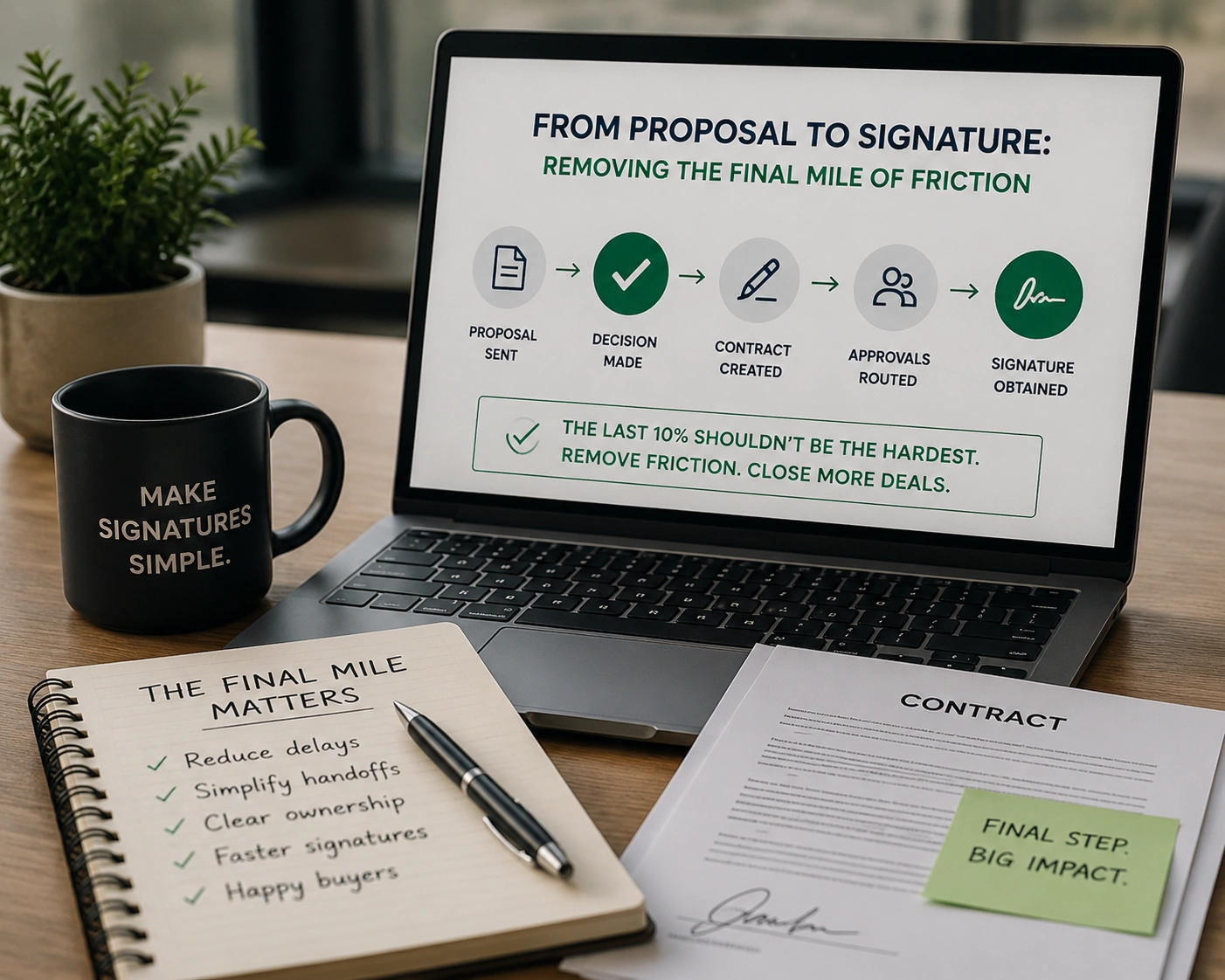
The final mile of a deal is often the most frustrating. The prospect is ready to buy. The commercial terms are agreed in principle. And then the process slows to a crawl.
Proposals take days to write because they require input from multiple people and go through multiple rounds of revision. Contracts require legal review. Signatures need to be chased. Onboarding documentation needs to be prepared. What should be a matter of days becomes a matter of weeks — and in that time, deals can fall apart, budgets can be reallocated, and champions can move on.
Why These Problems Persist
The reason these friction points have persisted for 35 years, despite enormous investment in sales technology, is that most technology has been built to manage the sales process rather than to remove the friction within it.
CRM systems are record-keeping tools. They capture what happened, but they don’t help you prepare for what’s about to happen. Engagement platforms automate outreach, but they don’t help you understand the prospect well enough to make that outreach relevant. Proposal tools provide templates, but they don’t generate the insight that makes a proposal compelling.
- Most sales technology manages the process — it doesn’t remove the friction
- The preparation gap requires intelligence, not just information
- The knowledge silo requires capture and synthesis, not just storage
- The administrative burden requires genuine automation, not just workflow management
- The proposal bottleneck requires acceleration of the entire back-office of sales
What Revmai Is Built to Do
When I decided to build Revmai, I started with these four friction points — not with a technology capability looking for a problem. The question was: what would it take to genuinely remove these frictions, rather than just manage them?
The answer required a fundamentally different approach. Not another point solution for one part of the sales process, but an integrated platform that addresses the entire journey from first contact to signed contract. Not just automation of tasks, but genuine intelligence — the kind that helps salespeople prepare better, respond better, and close faster.
After 35 years of watching the same problems recur, I’m convinced that the technology now exists to solve them properly. That’s what we’re building. And that’s why I’m more excited about the next five years of commercial selling than I’ve been at any point in my career.