

There is a conversation that happens in almost every sales organisation, usually in the context of a pipeline review. A deal is presented that doesn’t quite fit the profile of the company’s best customers. The rep is enthusiastic. The prospect is engaged. The revenue would be welcome. And so the deal moves forward — despite the nagging sense that it probably shouldn’t.
This is the ICP discipline problem in microcosm. Not a failure of knowledge — most sales leaders know what their ideal customer looks like. But a failure of application — the consistent, systematic prioritisation of prospects that fit that profile over those that don’t.
Why ICP Discipline Matters More Than You Think
The case for ICP discipline is usually made in terms of win rates: if you focus on the right prospects, you’ll close more deals. This is true, but it understates the impact.
The full case is about the entire commercial system. When you consistently pursue the right prospects, your sales cycle shortens because you’re not spending months trying to convince people who were never going to buy. Your customer success rates improve because you’re onboarding customers who are actually set up to succeed with your product. Your referral rates increase because satisfied customers who fit your ICP are more likely to know other prospects who also fit it.
Based on Revmai analysis of early-access customers, those with well-defined and consistently applied ICPs show 40% shorter sales cycles and 60% higher customer retention rates compared to those without.
The Anatomy of a Good ICP
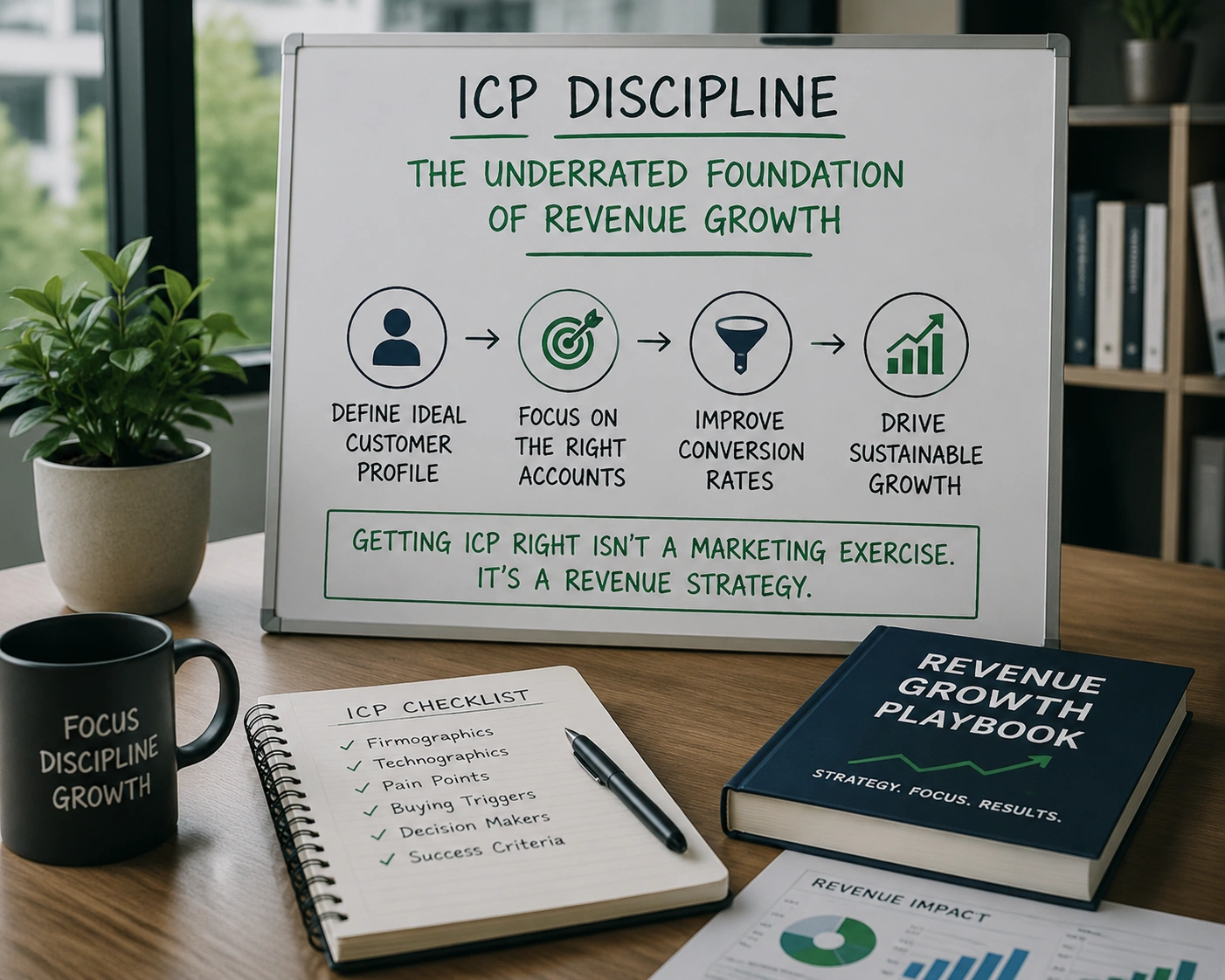
Most ICP definitions are too thin. They identify firmographic characteristics — company size, industry, geography — but miss the deeper attributes that actually predict success.
A well-constructed ICP captures not just who the prospect is, but what situation they are in. What problems are they experiencing? What have they tried before? What internal dynamics make them ready to change? What does success look like for them — and does your product genuinely deliver it?
- Firmographic fit: size, industry, geography, technology stack
- Situational fit: the specific problems and triggers that make them ready to buy
- Organisational fit: the internal dynamics and decision-making structure
- Success fit: whether your product genuinely solves their problem at the level they need
- Relationship fit: whether you have or can build the right connections within the organisation
The Discipline Gap
Knowing your ICP and applying it consistently are different things. The gap between them is the discipline gap — and it is created by structural pressures that are entirely understandable.
Pipeline pressure is the primary culprit. When quota attainment is at risk, the temptation to pursue any revenue-generating opportunity is powerful. The deal that doesn’t quite fit the ICP looks better when the alternative is missing the number.
Short-term incentive structures compound the problem. If reps are measured and rewarded on deals closed rather than on the quality of the pipeline they build, the rational response is to pursue volume over fit. The consequences — longer sales cycles, higher churn, lower customer lifetime value — show up later, in someone else’s numbers.
Building ICP Discipline Into the System
The solution is to make ICP discipline structural rather than individual. Rather than relying on each rep to apply the ICP consistently under pressure, build it into the systems and processes that govern how prospects are identified, qualified, and pursued.
This means ICP scoring at the prospecting stage, so that reps are working from lists of pre-qualified targets rather than building their own. It means qualification frameworks that surface ICP fit as a primary criterion, not an afterthought. It means management conversations that reward pipeline quality, not just pipeline quantity.
When ICP discipline is built into the system, it stops being a matter of individual willpower and becomes a property of the commercial process. That is when it starts to compound — and when its impact on revenue growth becomes genuinely transformative.