

Ask any sales leader what kills deals, and you’ll hear a familiar list: price objections, competitive losses, budget freezes, champion turnover. These are real causes of deal death. But there is a less visible killer that accounts for a significant proportion of lost revenue — and it rarely appears in win/loss analysis.
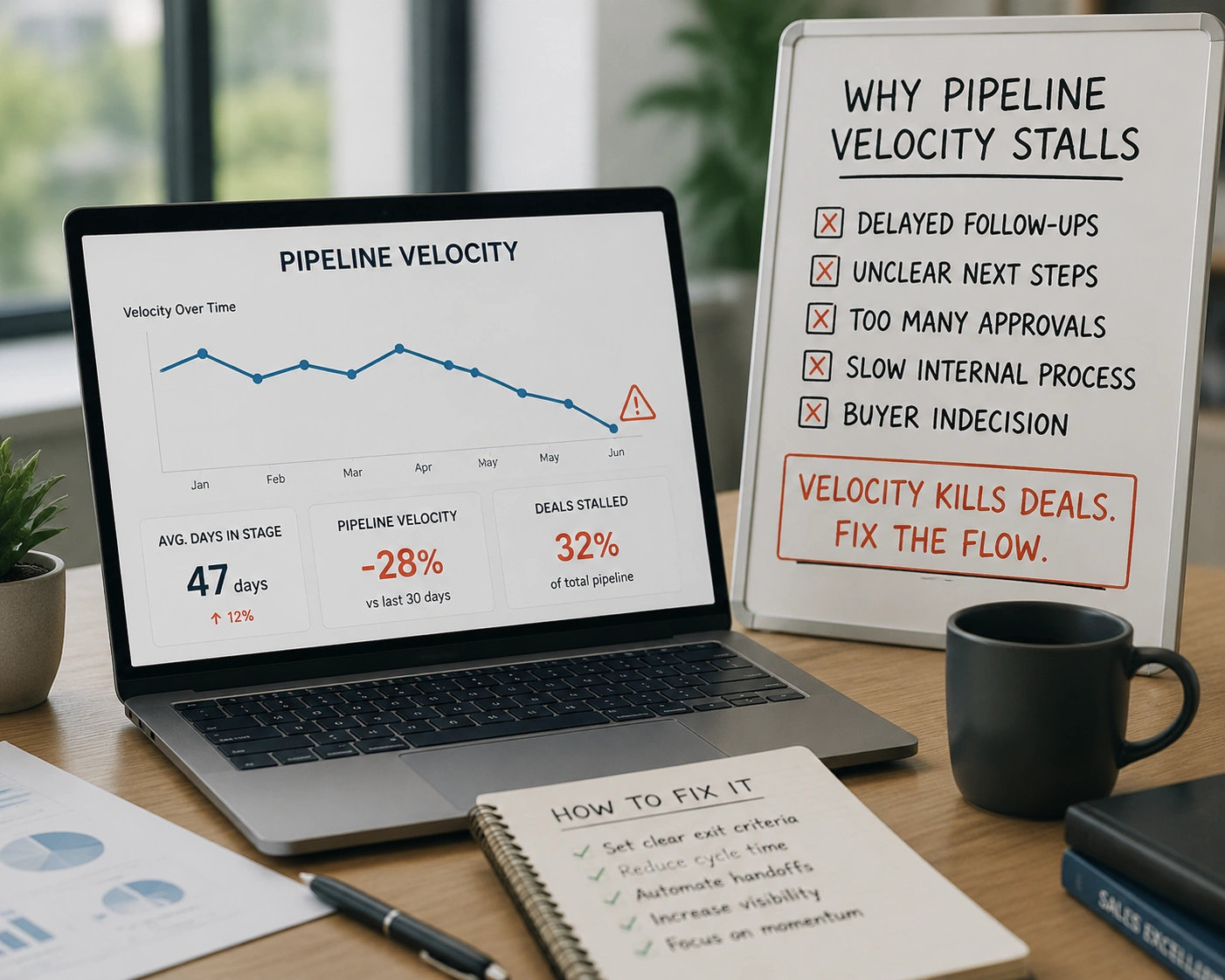
That killer is delay. The deal that stalls at proposal stage because the document takes ten days to produce. The contract that sits in a legal queue for three weeks. The onboarding that is delayed because the documentation isn’t ready. In each case, the deal doesn’t die dramatically — it just fades, as momentum dissipates and attention moves elsewhere.
Understanding Pipeline Velocity
Pipeline velocity is a measure of how quickly deals move through your sales process. It is a function of four variables: the number of deals in the pipeline, the average deal value, the win rate, and the length of the sales cycle. Most sales leaders focus their improvement efforts on the first three — adding more deals, increasing average deal size, improving win rates.
The fourth variable — cycle length — is often treated as a given. ‘Our sales cycle is six months.’ ‘Enterprise deals take a year.’ These statements are presented as facts about the market, not as problems to be solved. But in most cases, a significant portion of that cycle length is not inherent to the complexity of the deal. It is the product of process friction that can be reduced.
Revmai research data shows that reducing sales cycle length by 20% has the same impact on pipeline velocity as increasing win rate by 20% — but cycle length reduction is often far more achievable.
Where Velocity Stalls
The friction points that slow pipeline velocity tend to cluster in predictable places. Understanding where they are is the first step to addressing them.
Between Discovery and Proposal
The gap between a successful discovery meeting and the delivery of a proposal is one of the most common velocity killers. Proposals require input from multiple stakeholders, go through multiple rounds of revision, and are often produced from scratch rather than from a well-maintained template library. The result is a process that takes days or weeks when it should take hours.
Between Proposal and Contract
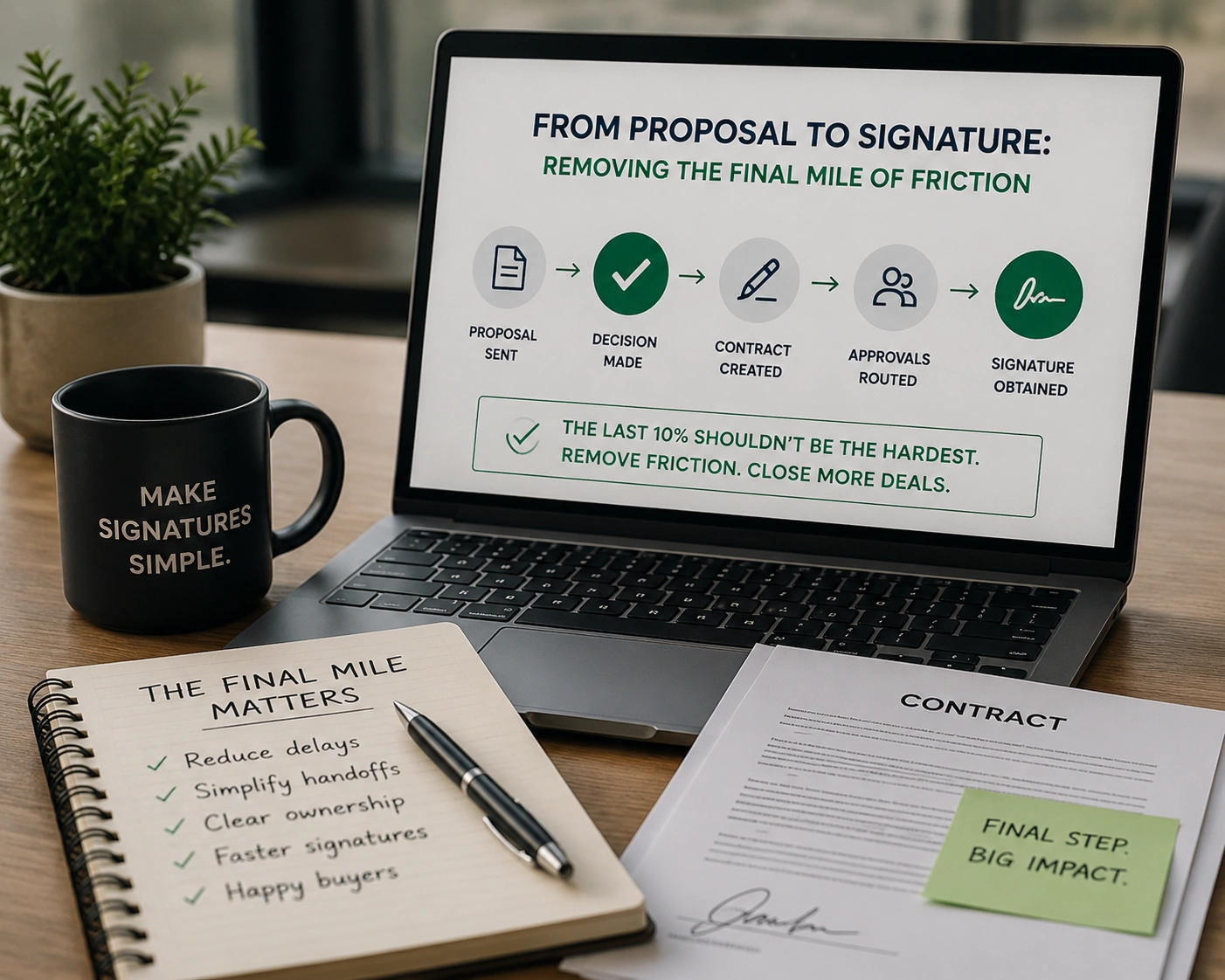
Once a proposal is accepted, the contract process introduces a new set of delays. Legal review, redlining, approval chains — each adds time, and each creates an opportunity for the deal to stall or for the prospect’s attention to drift.
Between Contract and Onboarding
Even after the contract is signed, velocity problems can persist. Onboarding documentation that isn’t ready. Implementation timelines that haven’t been planned. Handover processes that require the sales rep to remain involved long after the deal is closed. Each of these delays the point at which the customer starts realising value — and increases the risk of early churn.
The Fix: Process Intelligence, Not Just Process Management
The traditional response to velocity problems is process management: define the steps, set the timelines, hold people accountable. This helps at the margins, but it doesn’t address the underlying causes of delay.
The more effective approach is process intelligence — using technology to remove the friction at each stage rather than just to monitor it. AI-generated proposals that can be produced in hours rather than days. Automated contract workflows that move documents through approval chains without manual chasing. Onboarding templates that are ready to deploy the moment the contract is signed.
- Reduce proposal production time from days to hours with AI-assisted drafting
- Automate contract workflows to eliminate manual approval chasing
- Build onboarding documentation in parallel with the sales process, not after it
- Use deal intelligence to identify stalling deals before they are lost
- Measure cycle length by stage, not just overall, to identify the specific friction points
Pipeline velocity is not a fixed property of your market or your product. It is a reflection of your process — and processes can be improved. The organisations that treat velocity as a variable to be optimised, rather than a constant to be accepted, will consistently outperform those that don’t.